Developing new synthetic routes and applications for polyelectrolytes
Click on each topic for details
Semiconductive nanoparticles based on polyelectrolyte complexation
Because of their unique optoelectronic properties, semiconducting nanoparticles are revolutionary materials for various applications, including plastic electronics and biological imaging. Traditional approaches based on inorganic materials (“quantum dots”) or all-covalent semiconducting block copolymers (“polymer dots”) either involve toxic chemicals or highly complex synthesis routes, respectively. To avoid these problems, an innovative approach is proposed that starts from two water-soluble, easily available and non-toxic polymeric components. By combining both aqueous polyelectrolyte-based formulations, well-defined nanometer-sized semiconducting particles are expected to be formed spontaneously. Furthermore, the electrostatic interactions inside the particles may result in enhanced optoelectronic properties compared to traditional polymer dots.
People: Anton Hofman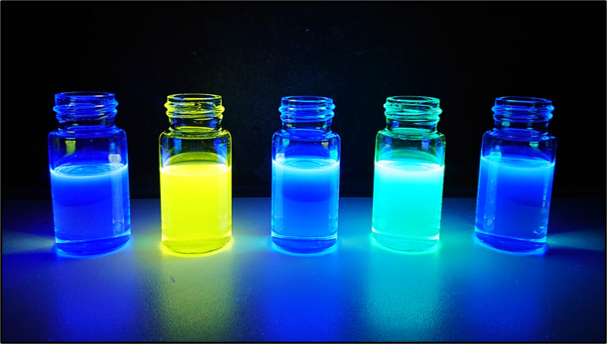
 Polymer Science